
Estate & Inheritance Tax Planning
Because having the right perspective helps you protect more of your wealth
Building wealth is one thing. Preserving it for the people you care about is another. Inheritance Tax (IHT) and estate planning is about ensuring your wealth passes to the right people, at the right time and as tax efficiently as possible.
With property values, pensions, investments and savings often pushing estates above available allowances, many families are exposed to Inheritance Tax without realising it. The right IHT planning can help identify opportunities to reduce potential liabilities and help more of your wealth reach future generations.
Whether you are looking to preserve family wealth, support future generations, protect vulnerable beneficiaries or gain confidence that your affairs are in order, having the right plan in place can make a significant difference.
Your financial advisor can help you understand your position, explore available planning options and create a strategy that supports both your family and your long-term legacy.
What is Estate & IHT Planning?
Estate and IHT planning is the process of organising your financial affairs so your assets can be passed on according to your wishes.
This often involves much more than writing a will. It can include reviewing ownership structures, considering gifting strategies, coordinating pension benefits, establishing trusts where appropriate and ensuring the right legal protections are in place.
Inheritance tax planning forms an important part of this process, helping identify opportunities to manage, mitigate or reduce potential tax liabilities so more of your wealth can benefit your chosen beneficiaries.
Effective planning considers your wider financial picture, ensuring decisions made today support both your lifetime objectives and the legacy you wish to leave behind.
Important Estate Planning Changes from April 2027
Pension Wealth Will Become More Relevant to Estate & IHT Planning
From April 2027, unused defined contribution pension funds are expected to form part of an individual’s estate for Inheritance Tax purposes. This means pensions may need to be considered alongside property, savings and investments when assessing a potential inheritance tax liability.
For many families, these changes could increase the value of their estate and make estate planning more important than ever.
Are You Asking Yourself These Questions?
Many estates are worth more than expected once property, pensions, savings and investments are taken into account. Understanding your potential liability is the first step towards effective planning.
Effective planning can help ensure valuable allowances, exemptions and reliefs are not overlooked.
Depending on your circumstances, there may be opportunities to mitigate a future liability through gifting, pension planning and other estate planning strategies.
Passing wealth to family members during your lifetime may help reduce the value of your estate while allowing you to see loved ones benefit from your support.
Trusts can offer additional control and protection in certain situations, helping ensure assets are managed and distributed according to your wishes.
Wills, Lasting Powers of Attorney and beneficiary nominations all play an important role in ensuring your wishes can be carried out if circumstances change.
The Financial Conduct Authority does not regulate Trusts and Taxation advice.
Because having the right perspective helps you protect more of your wealth
Protect Your Wealth. Preserve Your Legacy.
Inheritance Tax and estate planning can be complex, but the right advice can help you make informed decisions with confidence.
Understanding Inheritance Tax
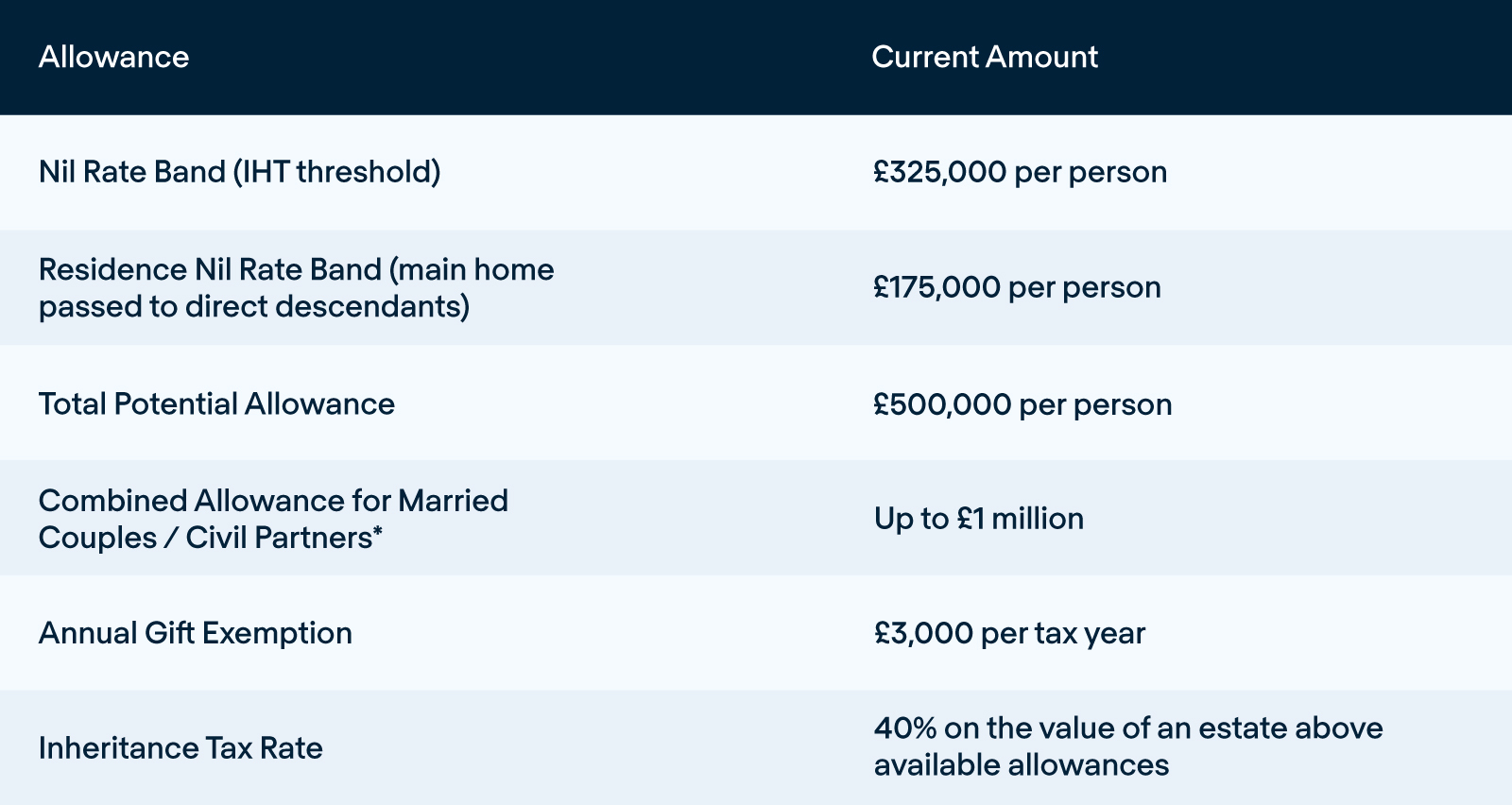
*Subject to eligibility and the transfer of unused allowances between spouses or civil partners.
Important: The annual gift exemption is not a limit on how much you can give away. Larger gifts may also fall outside your estate for Inheritance Tax purposes, depending on your circumstances and how long you survive after making the gift.
Helping You Preserve More of Your Wealth
A comprehensive IHT and estate plan may include:
- Understanding potential Inheritance Tax liabilities
- Making effective use of available allowances and exemptions
- Considering lifetime gifting strategies
- Reviewing ownership of property and investments
- Coordinating pension and beneficiary arrangements
- Establishing trusts where appropriate
- Creating or reviewing Lasting Powers of Attorney
- Planning for future care needs
- Reviewing succession and legacy objectives
- Ensuring your wishes are clearly documented
The Right Perspective. More Wealth for the People Who Matter Most.
No two families, estates or ambitions are the same.
With the right planning in place, you can have greater confidence that more of your wealth will be passed on to the people and causes you care about most.
Estate & IHT Planning Review
Estate planning and inheritance tax can be complex, but the right advice can help you make informed decisions with confidence.

Advice for Every stage of Life
-
Building
Focus on creating strong foundations

As wealth begins to grow, it’s important to establish appropriate legal and financial arrangements for the future.
-
Growing
Focus on protecting what you've built

As assets increase and family circumstances evolve, opportunities for proactive estate planning often become more important.
-
Preserving
Focus on reducing unnecessary tax

Careful planning can help improve the efficiency of passing wealth between generations.
-
Preparing
Focus on ensuring your wishes are understood

Regular reviews help ensure wills, beneficiary arrangements and legal protections remain appropriate.
-
Passing On
Focus on the legacy you want to leave behind

Effective planning helps ensure more of your wealth benefits the people and causes that matter most to you.
The Financial Conduct Authority does not regulate Trusts and Taxation Advice.
Find your local office or advisor
Over 100+ advisors rated on

Frequently Asked Questions
No. Rising property values, pensions and accumulated savings mean many families could benefit from reviewing their estate planning arrangements.
There are a number of planning strategies that may help minimise a future liability, depending on your circumstances and objectives.
Yes. A will helps ensure your wishes are clearly documented and provides certainty for those you leave behind.
A Lasting Power of Attorney allows someone you trust to make decisions on your behalf if you become unable to do so.
Current rules are changing. From April 2027, unused defined contribution pension funds are expected to become part of an individual’s estate for Inheritance Tax purposes, making regular reviews increasingly important.
Yes. Many people make gifts as part of their estate planning strategy. The Inheritance Tax treatment will depend on the type of gift, your circumstances and how long you survive after making it.
Specialist Support When Required
Where your circumstances require specialist advice, and the local office does not hold the necessary permission from the Financial Conduct Authority, we can draw upon the wider expertise available across Perspective Financial Group. Many of our financial planners hold advanced qualifications in specialist areas of advice and have decades of experience helping clients navigate complex financial planning matters.
The information contained within the website is subject to the UK regulatory regime and is therefore primarily targeted at customers in the UK.
Should you have cause to complain, and you are not satisfied with our response to your complaint you may be able to refer it to the Financial Ombudsman Service, which can be contacted as follows:
The Financial Ombudsman Service, Exchange Tower, London, E14 9SR
Tel: 0800 023 4567 or 0300 123 9123